
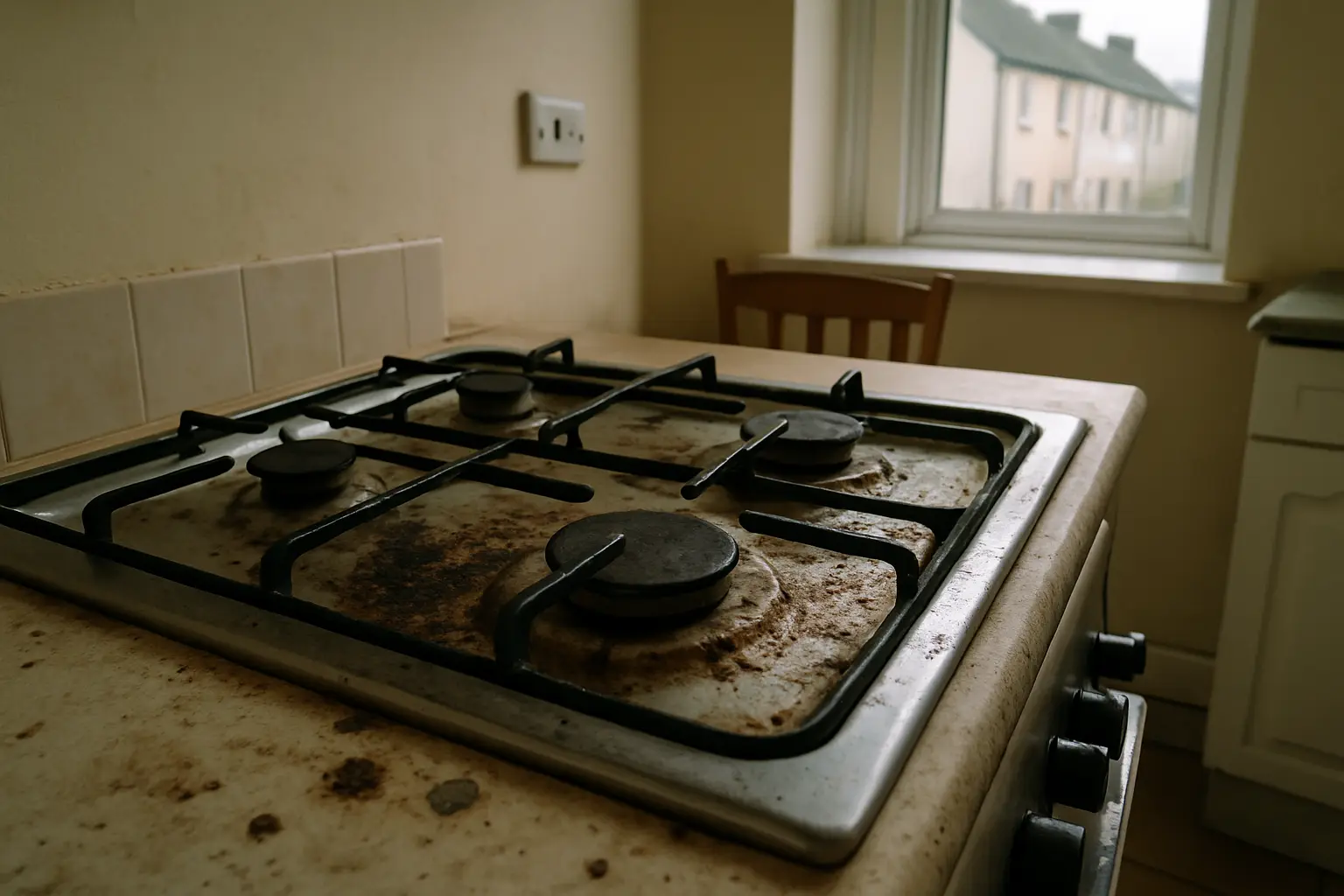
If you want to know how to remove kitchen grease fast, start with warm water and a surfactant such as washing-up liquid rather than water alone, because plain water cannot break down fat by itself. Apply the solution, let it sit on baked-on residue for a minute or two, then wipe with a damp microfibre cloth and dry the surface so it does not streak. For thicker buildup on a hob, an oven exterior or an extractor filter, a baking soda paste or a short soak loosens the grease better than scrubbing straight away.
Why plain water does not cut through grease
Grease and oil are non-polar, which means they repel water instead of dissolving in it. Soap and washing-up liquid work because their molecules have a water-loving end and a fat-loving end. The fat-loving end buries itself in the grease while the water-loving end stays on the outside, forming tiny clusters called micelles that lift the grease away from the surface and let it rinse off. The American Cleaning Institute explains this as the basic chemistry behind everyday cleaning products, and it is why a squirt of washing-up liquid in warm water outperforms water on its own on a greasy hob or cooker hood.
This also explains why hot water helps: warmth makes fat softer and easier for the surfactant to break apart. Cold water cleaning solutions generally need more time or more scrubbing to do the same job.
How to remove kitchen grease from different surfaces
Not every kitchen surface responds to the same treatment, and using the wrong method risks scratches or dull patches. Match the approach to the material.
- Hobs and worktops: warm water with a little washing-up liquid, applied with a soft cloth or non-scratch sponge, handles most everyday grease. For dried-on marks, a baking soda paste left on for a few minutes loosens the residue before you wipe it away.
- Stainless steel appliances: wipe in the direction of the grain rather than across it, and avoid abrasive pads that can leave fine scratches. See the guide on cleaning stainless steel without streaks for a full method.
- Tiles and splashbacks: a warm water and washing-up liquid solution suits most glazed tiles. Natural stone splashbacks are porous and can be damaged by acidic products, so check the manufacturer’s care instructions before using anything stronger than water and a mild detergent.
- Extractor fan filters: most mesh or aluminium filters can be removed and soaked in hot water with washing-up liquid, then scrubbed gently with a soft brush along the mesh channels and rinsed until the water runs clear.
Where a surface is old, damaged or an unfamiliar material such as natural stone or a painted finish, it is worth testing any product on a small hidden area first.
Step-by-step method for a greasy hob or splashback
This sequence works for most day-to-day grease on hobs, worktops and glazed splashbacks.
- Clear the surface of pans, utensils and crumbs.
- Mix warm water with a small amount of washing-up liquid in a spray bottle or bowl.
- Apply the solution and leave it for one to two minutes on greasy patches.
- Wipe with a soft cloth or non-scratch sponge, working from the least greasy area to the worst.
- For stubborn spots, apply a thin baking soda paste, leave for a few minutes, then wipe again.
- Rinse with a clean, damp cloth to remove any soap residue.
- Dry the surface with a fresh cloth to prevent streaking and water spots.
Products to use, and what not to mix
Washing-up liquid and warm water handle most household grease without any specialist products. Shop-bought degreasing sprays can help with heavier buildup, but they should always be used according to the label, in a ventilated room. The Health and Safety Executive’s guidance on cleaning chemicals warns against mixing different cleaning products together, since combinations such as bleach with an acidic cleaner can release harmful fumes. Keep products in their original containers, never decant them into unlabelled bottles, and rinse surfaces that will touch food before cooking on them again.
Avoid scouring pads or wire wool on stainless steel, enamel or coated non-stick surfaces. They can scratch through a protective finish and make the surface more likely to trap grease in the future rather than less.
Keeping grease from building up again
A quick wipe with warm soapy water straight after cooking, while the grease is still soft, takes far less effort than tackling it once it has hardened. Extractor fan filters deserve particular attention: fire services, including West Yorkshire Fire and Rescue Service, point out that grease trapped in extractor filters is flammable and recommend cleaning them regularly, more often if you fry food frequently. Building a simple habit, wiping the hob after each use and washing the extractor filter every few weeks, keeps a full kitchen deep clean shorter and less physically demanding when it is due. If you prefer a natural approach for light, everyday marks, the guide on what you can and cannot clean with white vinegar explains where vinegar is useful and where it is not, since it is not the best choice on every kitchen surface.