
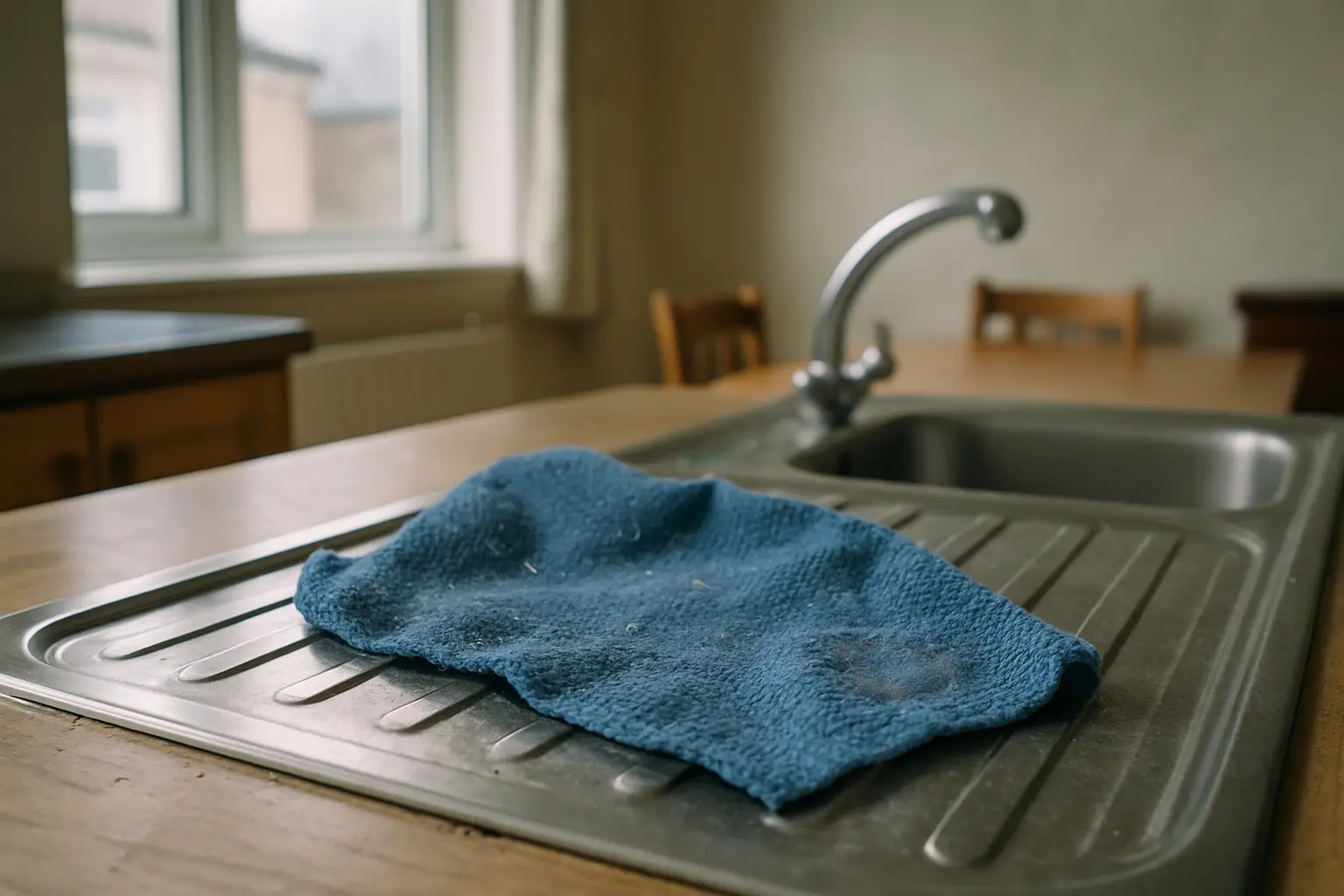
Here is how to clean microfibre cloths so they keep working: wash them separately from other laundry, in warm water with a small dose of mild, fragrance-free detergent, and skip the fabric softener and bleach completely. Dry on a low heat setting or on the line rather than a hot tumble cycle. Microfibre is a synthetic weave, and the split threads that make it good at lifting dust and grease are exactly the part that gets clogged by softener residue and cotton lint. Get the wash right and a good cloth keeps performing for months. Get it wrong and it starts smearing instead of cleaning within a handful of washes.
Why microfibre cloths need different care
Microfibre cloths are made from very fine synthetic threads, usually a blend of polyester and polyamide, split during manufacturing into many finer strands. According to e-cloth, a maker of split-fibre cleaning cloths, this splitting is what gives microfibre its cleaning power. The exposed edges act almost like tiny scrapers, while the gaps between strands draw in water, oil and dust rather than pushing them around a surface. A cotton cloth or a sheet of kitchen roll mostly smears grease across a worktop. A microfibre cloth, used correctly, picks it up. The same fine structure is behind tricks like drying a window without streaks or wiping stainless steel along the grain, covered in our guides to cleaning windows without streaks and cleaning stainless steel without streaks.
That structure is also fragile in a different way to cotton. Fabric softener and dryer sheets leave a waxy coating that fills the gaps between the split fibres, and once that happens the cloth stops absorbing and starts pushing dirt around, the same problem it was bought to solve. High heat can flatten or partially melt the synthetic strands too, which is why care guides consistently recommend lower temperatures than you would use for towels or bedding.
How to clean microfibre cloths step by step
- Shake or rinse off loose crumbs, hair and grit before the cloths go in the machine.
- Wash microfibre cloths on their own, or with other synthetic cloths only. Never mix them with towels, socks or cotton items that shed lint.
- Use warm water, not hot, on a gentle or delicate cycle.
- Add a small amount of a mild, fragrance-free detergent. Half your usual dose is normally enough, since microfibre does not need much to come clean.
- Leave out the fabric softener. A small splash of white vinegar in the rinse cycle freshens the cloths without coating the fibres.
- Dry on a low heat setting, or hang or lay the cloths flat to air dry.
What ruins microfibre cloths
- Fabric softener and dryer sheets, which coat the fibres and stop them absorbing properly.
- Bleach and other strong chlorine-based cleaners, which break the synthetic fibres down over repeated washes.
- Hot water and high tumble-dryer heat, which can flatten or damage the fine strands.
- Washing microfibre with towels, flannels or other cotton items, since the lint they shed clings to the split fibres and clogs them.
- Ironing, which does similar damage to high heat: it can melt or glaze the fibres flat, so they stop trapping dust the way they should.
Using a colour system so cloths do not spread germs
A simple way to stop one cloth spreading dirt from a bathroom into a kitchen is to keep a separate colour for each area of the home. The British Institute of Cleaning Science sets out a colour-coded system, now widely used across the professional cleaning industry, that assigns red to toilets and washroom floors, yellow to other bathroom surfaces such as sinks and mirrors, green to kitchens and food areas, and blue to general living spaces. You do not need an official branded set to use the idea. Any four colours of microfibre cloth work, as long as you keep the same colour for the same type of room every time and wash a bathroom cloth separately from a kitchen one. Our cleaning supplies checklist for cleaners starting out covers how to build a full colour-coded set if you want to take the system further.
Drying and storing microfibre cloths between cleans
A microfibre cloth that stays damp and balled up in a cupboard develops a musty smell fast, and that smell is hard to wash back out once it sets in. Hang cloths up or lay them flat to dry fully before folding them away. If a cloth has been used on anything greasy, rinse it under a hot tap with a squeeze of washing-up liquid straight after use rather than letting it dry with the grease still in the fibres. Keeping a small rotation of four or five cloths means one set can be in the wash while another dries, so you are never reaching for a stiff, sour one. This habit works well alongside a top-to-bottom routine, since dusting first with a dry microfibre cloth and vacuuming last, as covered in our guide to the right order to clean a room, catches far more than dusting after the floors are done.
When to replace a microfibre cloth
Even with careful washing, microfibre cloths wear out. Signs it is time to replace one include streaking on glass or stainless steel that a clean cloth used to avoid, a rough or matted feel where the fibres have flattened, or a cloth that no longer soaks up water quickly under a tap. Most household cloths hold up for many months of regular use if they are never softened, bleached or dried on high heat, but a cloth used for something heavier, like after-builders dust or baked-on oven grease, wears out faster than one kept for light dusting. It is worth retiring the worst-affected cloths from a set rather than judging the whole batch by its oldest member.