
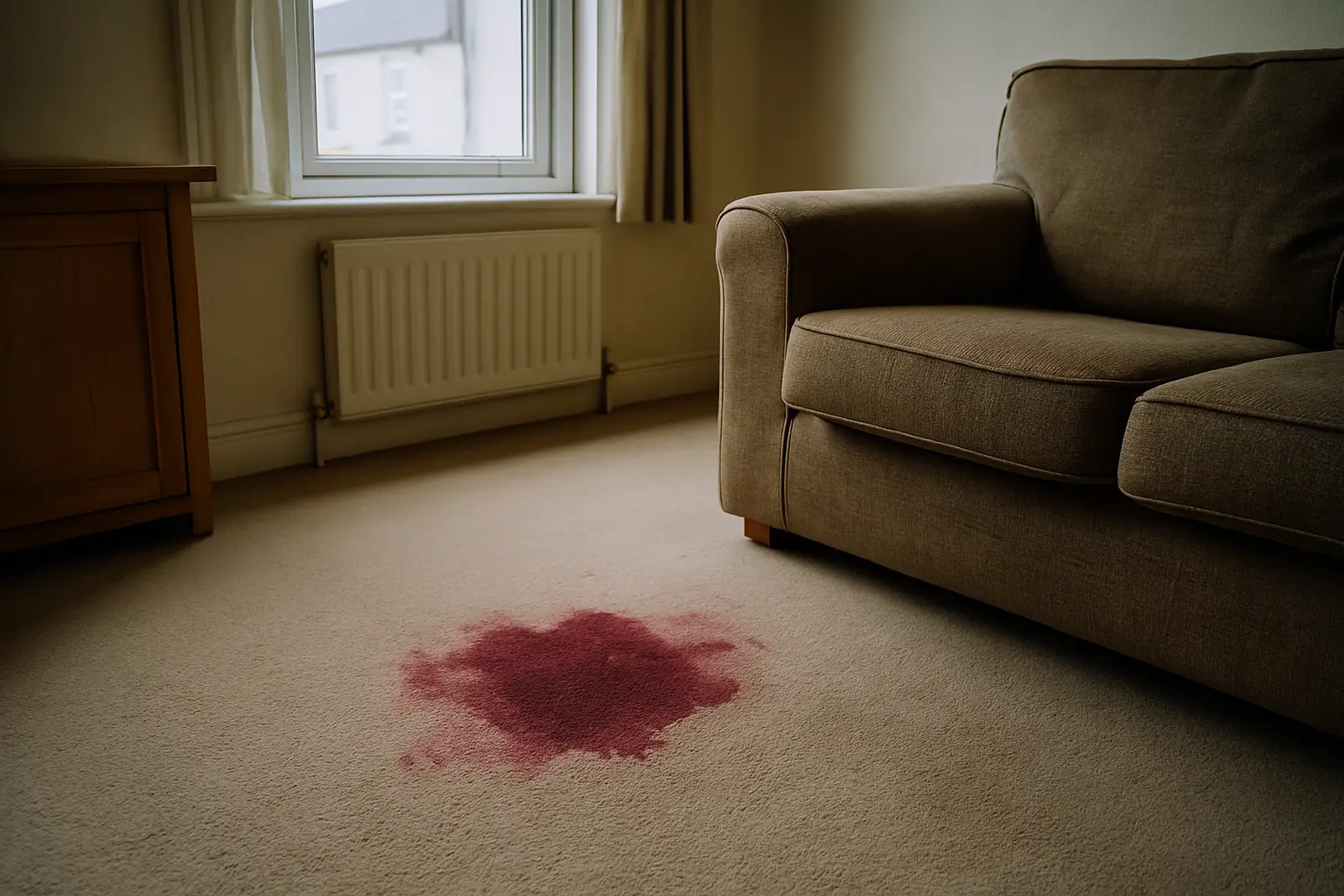
How to remove carpet stains comes down to speed and technique: blot up the spill straight away with a clean white cloth, working from the outer edge toward the centre so you do not spread it further, then treat the mark with cold water before reaching for a stronger product. Wine and coffee need different handling than mud, grease or pet accidents, so match the treatment to the stain rather than reaching for whatever is under the sink. Rubbing or scrubbing pushes the stain deeper into the pile and can fray or fluff the fibres, so a light touch and a bit of patience usually beats a heavy hand.
How to remove carpet stains
Speed matters more than any product you own. A fresh spill sits mostly on top of the fibres; once it dries it works down to the backing and grabs onto the pile, which is why old stains are so much harder to shift. Consumer Reports' stain guidance points to the same basic sequence for most household spills, and it holds up well for carpet:
- Scrape or blot away anything solid with a spoon or the edge of a cloth before you add any liquid.
- Blot, do not rub, using a dry white cloth or plain paper towel to lift as much of the spill as possible.
- Dampen a fresh cloth with cold water and blot again, working from the outside of the mark inward.
- Apply a small amount of a suitable cleaning solution to the cloth, not directly onto the carpet, and blot in stages.
- Rinse the area with a cloth dampened in plain cold water to remove any cleaning product residue.
- Press a stack of dry towels over the spot and weigh them down, or stand on them, to draw out the remaining moisture.
Repeating a light application two or three times works better than one drastic soaking. A carpet that stays wet for hours is more likely to develop a musty smell or, in a wool carpet, to shrink or pucker at the backing.
Matching the treatment to the stain
Most spills fall into a few categories, and knowing which one you are dealing with saves time.
- Protein-based stains such as blood, milk, egg or pet accidents respond to cold water. Hot water can cook the protein into the fibres and set the mark permanently.
- Tannin stains like wine, tea, coffee and fruit juice usually need a mild detergent solution after the initial cold water blot; letting them dry only bonds the colour more firmly to the pile.
- Oil and grease from cooking, cosmetics or shoe polish need a solvent-based approach or a dry absorbent such as cornstarch left to draw out the oil before you vacuum it up.
- Dye-based marks from ink, marker or some dyed fabrics are the hardest to shift and are often the point where a professional carpet cleaner is worth calling before you try anything stronger yourself.
If you are unsure what a mark is, treat it as you would a tannin stain first: cold water, then a mild detergent, checking progress after each stage rather than piling on product.
What to avoid
Never mix bleach with ammonia or with other cleaning products. The combination releases toxic fumes, a warning repeated by public health bodies including Washington State's Department of Health, and it is not worth the risk for a carpet stain. Keep any bleach-based product away from coloured or wool carpet altogether, since it can strip colour permanently within seconds.
Skip the hair dryer or radiator as a shortcut to dry a treated patch. Heat can set a stain that cold water would otherwise have lifted, and it can also shrink or distort natural fibres. Open a window or point a fan at the area instead, and give it time.
Caring for wool and delicate carpets
Wool carpet needs a gentler hand than synthetic pile. The WoolSafe Organisation, which sets independent standards for fibre-safe carpet care products, recommends working from the edge of a stain toward the middle, using only small amounts of a cleaner at a time and repeating lightly rather than applying one heavy dose. Its guidance also flags that products not designed for carpet can leave a sticky residue that attracts dirt faster afterward, which is worth knowing before reaching for whatever is under the sink.
For an old, large or unidentified stain on a wool or otherwise expensive carpet, it is often cheaper in the long run to get advice before treating it yourself. The same caution applies to a stained mattress or a fabric sofa: delicate or unknown fibres are where DIY stain removal is most likely to make things worse rather than better.
When to call an independent cleaner
Call in help when a stain has already dried in, covers a large area, keeps reappearing after cleaning, or sits on a carpet you cannot afford to risk damaging. A professional clean can also lift ground-in soil that ordinary vacuuming and spot treatment never reach, which is worth considering as part of a broader regular cleaning routine rather than only after an accident. If you are testing homemade options first, our guide to what white vinegar can and cannot clean covers where natural products are useful and where they are not.