
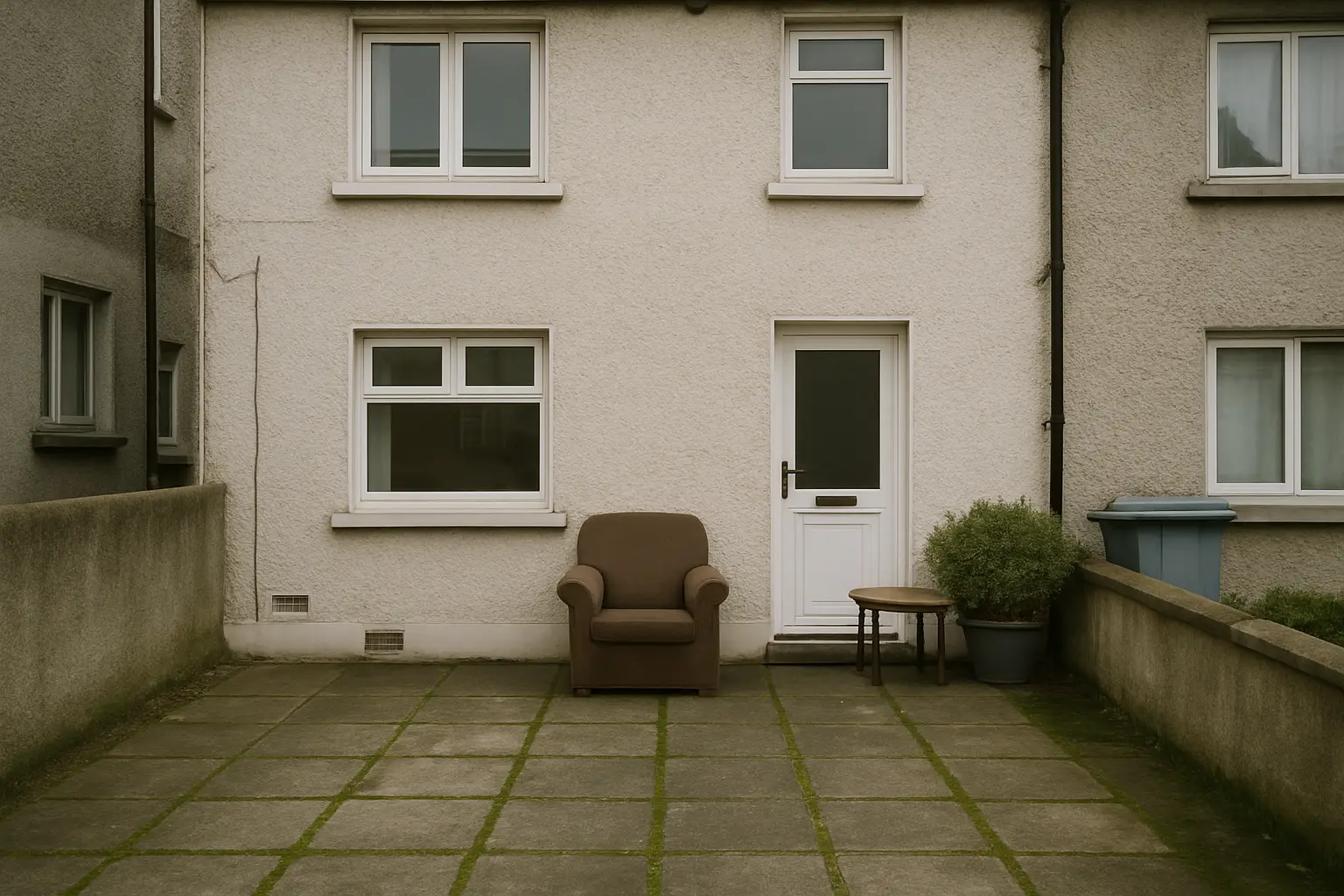
Knowing when to pressure wash a driveway comes down to two things: the weather and what is growing on the surface. Spring and autumn are usually the best windows, since mild temperatures and lower humidity let the surface dry quickly once you have finished, without a hard frost or heavy rain undoing the work. Hold off during a freeze, right before rain is forecast, or in the middle of a summer heatwave, when detergent can dry onto the surface before it has had time to work. If moss, algae or black staining has built up on a shaded or poorly drained patch, that is usually the real signal it is time, whatever the calendar says.
When to pressure wash a driveway, season by season
Spring lets you clear away whatever built up over a damp winter before it gets a chance to spread further. Autumn is useful too, clearing algae and leaves before the surface sits wet and shaded through the colder months. Both seasons give you a practical middle ground: warm enough for the surface to dry within a few hours, cool enough that you are not fighting baked-on grime or working in direct midday sun. Avoid the day of, or the day after, a heavy downpour, since a saturated surface dilutes any cleaning product and takes far longer to dry. In frost or near-freezing conditions, skip it altogether. Water forced into hairline cracks can freeze, expand and widen them, which turns a cosmetic job into a repair one.
Check what your driveway is made of first
Plain concrete and tarmac tolerate a reasonably strong jet, but block paving and natural stone need a gentler hand. Holding the lance at a steep angle straight down onto block paving can blast out the jointing sand that keeps the blocks locked together, which leaves the surface unstable even if it looks cleaner. Angling the nozzle closer to 45 degrees, working in manageable sections, and re-brushing fresh sand into the joints afterwards protects the paving while still lifting the dirt. Standing too close does more damage than running too high a pressure setting from further back, since a tight, concentrated jet is what actually etches soft stone or scours a groove into softer concrete.
If you are not sure what your driveway is made of, or it was laid a long time ago and some blocks already look loose underfoot, treat it as a job for a professional rather than a first attempt with a hired machine. A quick way to check is to press down on a few blocks near the edge of the drive with your foot. If any rock or shift, the base beneath them may already be compromised, and a high-pressure jet is more likely to expose that problem than solve it.
Why moss and algae take hold in the first place
Shaded, poorly drained patches are where growth comes back fastest, so a single pressure wash is rarely the end of the story. The Royal Horticultural Society notes that improving drainage around a driveway, such as a shallow gravel-filled channel along the edge, reduces how quickly moss and algae return, and that pressure washing combined with stiff-brush scrubbing is an effective non-chemical way to dislodge existing growth. A driveway in heavy shade may need attention twice a year rather than once, simply because the shade and damp that encourage regrowth stay in place between cleans.
Safety checklist before you start
- Wear eye protection, gloves and closed, non-slip footwear. A pressurised jet can cut skin and throw grit back at you.
- Clear loose stones, twigs and leaves off the surface first so they do not become projectiles.
- Keep children, pets and bystanders well away from the spray path for the whole job, not just while you are actively triggering the wand.
- Never point the lance at a person, an animal, or an electrical socket or outdoor fitting.
- Engage the trigger lock whenever you set the wand down, even for a moment.
- Test an inconspicuous patch on low pressure first and increase gradually, rather than starting at full power.
- Read the manufacturer’s manual for your specific machine, including the recommended nozzle for your surface type.
When to hold off, even if the driveway needs it
Skip it in freezing weather, on a driveway you cannot identify the material of, and on old or already-loose block paving until you have checked whether the joints will survive the pressure. Resin-bound and resin-bonded surfaces can also be damaged by an aggressive setting, since the stone can lift away from the binder if the jet is held too close for too long. If a section of the driveway is already cracked, sunken or clearly failing, a pressure wash will not fix that and may make loose material worse. In any of these cases, a lower pressure setting, a wider fan nozzle, or simply booking an experienced independent cleaner or contractor is the safer route.
It is also worth holding off on a brand new driveway. Freshly laid block paving and recently poured concrete both need weeks to fully cure and settle before they can take a high-pressure jet without disturbing the surface or the jointing. If a new drive already looks patchy, a soft brush and plain water is a safer first step than reaching for a machine before the surface has had time to harden properly.
If you are getting a rental property ready to hand back, the driveway is only one part of the picture. Our end of tenancy cleaning checklist covers the rest of the property room by room. And if the driveway belongs to a short-let property, kerb appeal matters for arriving guests too, so our Airbnb turnover cleaning checklist covers what else guests notice on the way in.