How to start a pressure washing service comes down to four things, not just buying a machine. You need equipment and nozzles matched to the surfaces you will actually clean, since concrete, decking and render do not tolerate the same pressure. You need a plan for where the dirty wash water goes once it leaves the job, because most driveways and patios drain straight into the public network. You need to decide on public liability insurance, and you need to be registered as self-employed with Revenue before you take paid bookings. Sort those four first, and the rest of the setup is mostly common sense.
How to start a pressure washing service: choosing your equipment
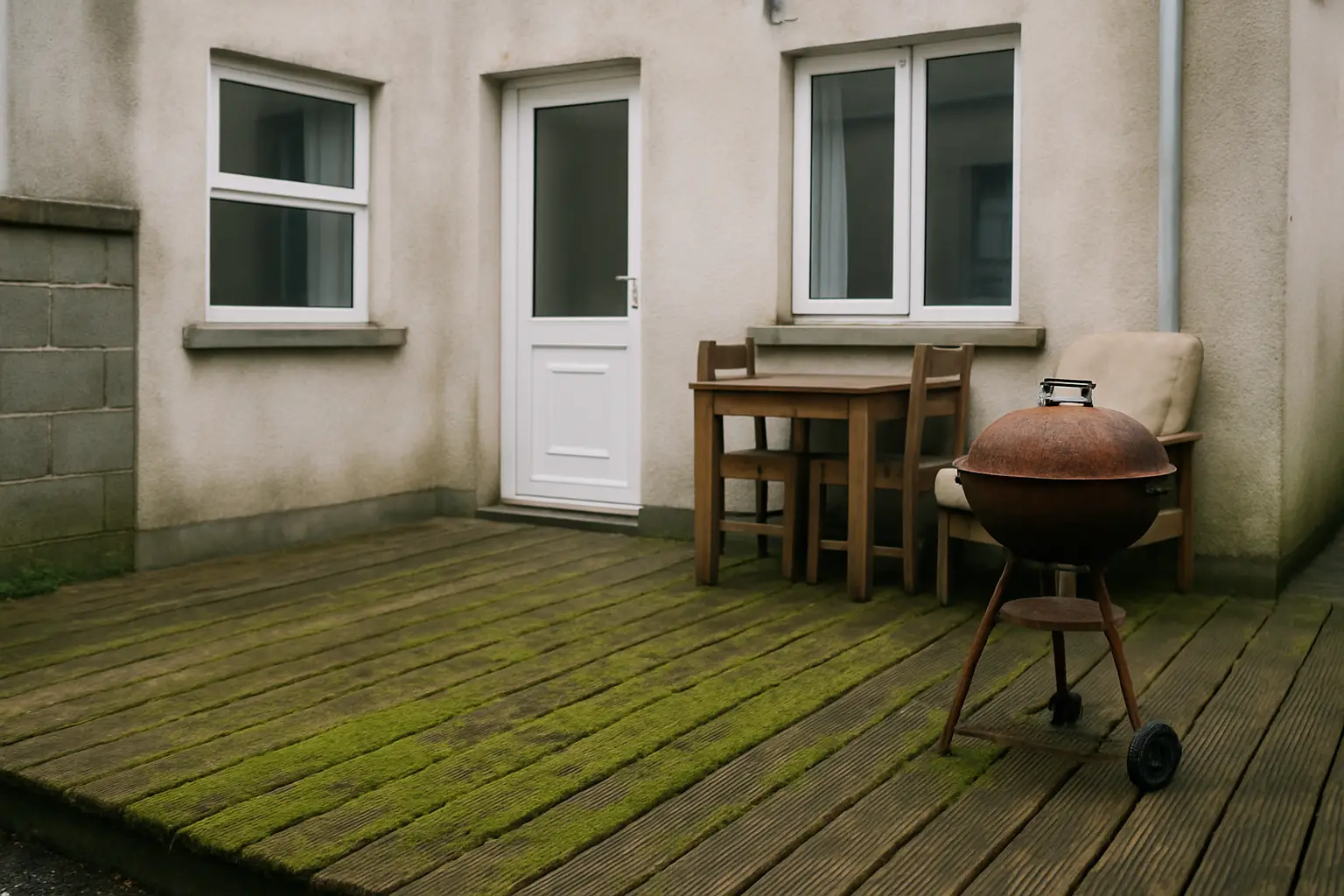
A domestic-grade electric pressure washer covers most driveway, patio and outdoor furniture jobs. Nozzles matter as much as the machine itself. Trade guides for decking generally colour-code nozzles by spray angle: a narrow red nozzle produces a concentrated jet that should never touch timber, a yellow nozzle is strong enough for concrete but too harsh for most decks, and a wide white or green nozzle spreads the same water pressure over a larger area for a gentler result on wood and painted surfaces. Getting this wrong is how cleaners gouge soft timber or strip a coating a client did not ask you to remove.
Render, timber cladding and roofs are a different job entirely and often need a lower-pressure, chemical-assisted method rather than a hard jet. If you are not confident reading what a surface can take, or a client's property has damage or loose material already, it is reasonable to turn the job down or price it as an inspection first rather than guess. Our guide on when to pressure wash a driveway goes through how to judge a surface and the weather conditions worth waiting out.
Where the wastewater goes
Most Irish properties have two separate drainage systems: a foul sewer that carries wastewater to a treatment plant, and a surface water drain that carries rainwater runoff straight to a local river or the sea, untreated. Detergent, oil and grit from a pressure washing job are exactly the kind of runoff that should not enter a surface water gully. Dublin City Council runs a misconnection programme under the Water Pollution Act 1977 precisely because chemicals and detergents washed into surface water drains harm river life, and it is the property owner who is responsible for putting a misconnection right once one is found.
In practice, that means checking where the nearest drain on a job actually goes before you start, directing wash water toward a foul drain or a planted area rather than a road gully where possible, and using a biodegradable, phosphate-free detergent when one is needed at all. On a driveway with no obvious foul connection nearby, plain water and mechanical scrubbing is often the safer default over a chemical treatment.
Electrical and general safety checks
Water and electricity together are the main hazard with an electric pressure washer used outdoors. The UK Health and Safety Executive's guidance on electrical risks from pressure cleaners recommends that any electric-powered machine used this way be run through a residual current device, either built into the socket, the extension lead or a plug-in adaptor, so the supply cuts out fast if a fault develops. Check the cable and plug for damage before every job, and never bypass or ignore a tripped RCD, since a trip is telling you a fault exists.
- Wear eye protection, gloves and closed, non-slip footwear.
- Plug the machine into an RCD-protected socket or use a plug-in RCD adaptor.
- Keep bystanders, children and pets away from the spray path for the whole job.
- Engage the trigger lock whenever the wand is set down, even briefly.
- Leave roof, gutter and upper-storey work to specialists with proper access equipment rather than pressure washing from a ladder.
Registering the work and getting insured
Taking on pressure washing jobs for payment makes you self-employed for tax purposes, the same as any other cleaning work. Our guide on becoming a self-employed cleaner in Ireland covers registering with Revenue step by step, so it is worth sorting that before your first paid job rather than after.
Public liability insurance is not a legal requirement to start trading, but Citizens Information notes it is worth carrying if members of the public, including a client on their own property, could be injured or have property damaged as a result of your work. A dropped hose, a slip on a wet path, or an overspray onto a car parked nearby are the kind of everyday risks that insurance is there for. Connect Cleaner does not verify or provide insurance for cleaners using the platform, so arranging and checking your own cover is a step you handle directly with an insurer.
Pricing and agreeing scope with the client
Agree the surface type, approximate area, and its condition with the client before you quote, ideally from photos. Confirm whether the client can provide an outdoor water tap and power socket, since bringing your own water supply changes both the time a job takes and what you need to charge for it. Our guide on pricing cleaning jobs in Ireland covers how to build a rate that accounts for travel, supplies and equipment wear, which applies just as much to pressure washing as to indoor cleaning.
Before you take the first job
A short checklist before you accept a pressure washing booking saves problems on site:
- Confirm the surface material and its condition from photos or a site visit.
- Check where the nearest drain on site leads before you start washing.
- Bring the right nozzle for the surface, not just the machine.
- Confirm access to an outdoor water tap and power socket.
- Pack PPE and an RCD adaptor if the client's socket is not already protected.
- Agree price and scope in writing before you turn up.
- Decide your own position on public liability insurance before you take your first paid job.